
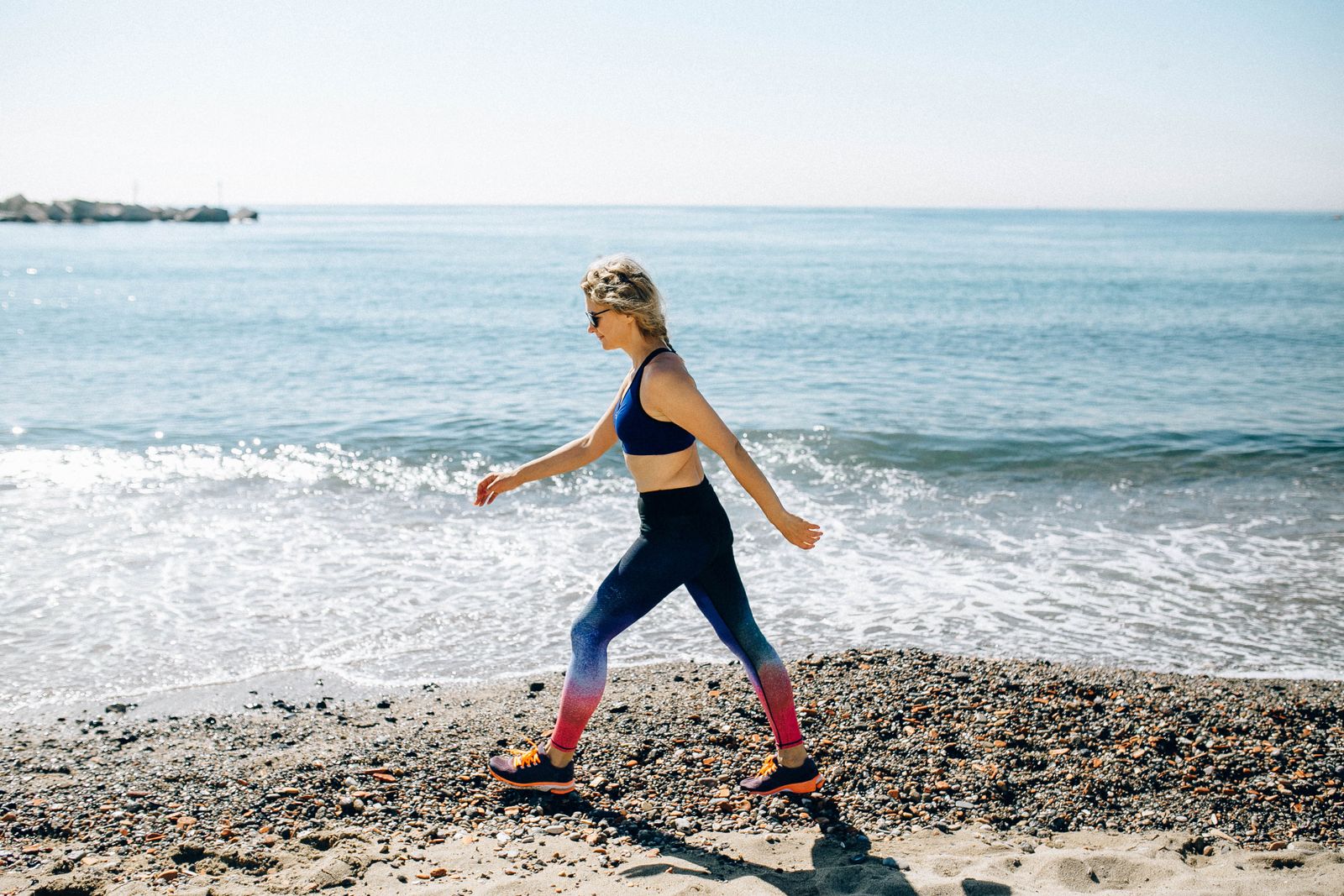
It’s 7:40 p.m. The dishes are mostly done, the kids are mostly in pajamas, and the step counter on your phone says 2,912. Your sneakers are sitting by the door, right where you kicked them off this morning. You glance at them and think: does a walk even count? Isn’t it too easy to actually change anything?
It counts. Walking is one of the most underrated weight-loss tools there is, and the reason is the exact thing you’re doubting: it’s easy enough to do on the days when nothing else is. Here’s how to turn “just a walk” into a real plan that bends around your life.
Quick answer: Yes, walking can help you lose weight. Build up to at least 150 minutes of brisk walking a week (about 30 minutes, five days), then work toward 300 minutes, while eating slightly less than you burn. A 30-minute brisk walk burns roughly 100 to 190 calories, depending on your body weight and pace.
Key Takeaways
- Walking supports weight loss best when it’s paired with modest changes to what you eat. Food creates most of the deficit; walking helps you keep it going and keep weight off.
- Brisk walking burns roughly 100 to 190 calories per 30 minutes for most adults. Heavier bodies and faster paces burn more.
- You don’t need 10,000 steps. Research links health benefits to steadily climbing step counts, leveling off around 6,000 to 8,000 a day for adults 60+ and 8,000 to 10,000 for younger adults.
- Track whichever number you’ll actually watch: minutes for structure, steps for all-day movement.
- Short walks count. Three 10-minute walks add up just like one 30-minute walk.
Can you really lose weight just by walking?
You can, but it helps to know what walking is really doing for you. Weight loss comes from burning more energy than you take in. The CDC is straightforward about this: most weight loss comes from eating fewer calories, while regular physical activity is what helps you keep the weight off. Unless you trim your food a little, you’d need a high amount of activity to lose weight with movement alone.
That’s not bad news. Walking makes a small eating change go further, helps protect your progress, and is gentle enough to do daily. Mayo Clinic notes that regular brisk walking can help you manage your weight, boost energy, and improve mood and sleep, and that 300 or more minutes a week of moderate activity may help with losing weight or keeping it off. Pair your walks with a few easy food habits (we cover those in how to lose weight without dieting) and you have a plan that actually holds.
How many calories does walking burn?
Less than your fitness tracker might suggest, and more than nothing. Here are the estimates from Harvard Health’s chart of calories burned in 30 minutes for people of three different weights:
| 30 minutes of walking | 125 lb person | 155 lb person | 185 lb person |
|---|---|---|---|
| 3.5 mph (about a 17-minute mile) | 107 calories | 133 calories | 159 calories |
| 4 mph (about a 15-minute mile) | 135 calories | 175 calories | 189 calories |
The CDC’s own example lands in the same range: about 140 calories for 30 minutes of brisk walking at 3.5 mph for a 154-pound person. So five brisk 30-minute walks a week burn somewhere around 500 to 950 calories, depending on your size and speed.
Watches and treadmills estimate calories too, and those estimates vary from device to device. The real takeaway: walking is a steady, reliable contributor, not a license to “earn” a dessert. That mindset alone keeps a lot of people from stalling out.
How many steps a day should you walk to lose weight?
There’s no magic step count for weight loss, and 10,000 isn’t a scientific finish line. A 2022 meta-analysis of 15 studies and more than 47,000 adults, published in The Lancet Public Health, noted there was little evidence behind the 10,000-step rule. It found that more daily steps were linked to a progressively lower risk of death, leveling off around 6,000 to 8,000 steps a day for adults 60 and older and 8,000 to 10,000 for adults under 60.
For weight loss, the smartest target is the one just above where you are now:
- Find your baseline. Check your average daily steps over the last week. No judgment. It’s just a starting line.
- Add 1,000 to 2,000 steps. That’s roughly a 10- to 20-minute walk. Hold it until it feels normal, usually one to two weeks.
- Repeat. Keep nudging up until you land somewhere in that 7,000 to 10,000 range most days.
Should you track steps or minutes for weight loss?
Both work. Pick the one you’ll actually look at.
- Minutes are best for structure. “30 minutes, brisk, five days” maps directly onto the CDC’s guideline of 150 minutes a week of moderate activity.
- Steps are best for all-day movement. They capture the grocery run, the school pickup and the pacing during phone calls, which add up more than you’d think.
Here’s a rough way to translate between them. At 3.5 mph, a mile takes about 17 minutes, so a 30-minute brisk walk covers about 1.75 miles. Most adults take roughly 2,000 to 2,500 steps per mile depending on stride length, which puts that walk at about 3,500 to 4,500 steps. Your numbers will vary, and that’s fine.
What makes a walk “brisk”? Use the CDC’s talk test: during moderate-intensity activity you can talk, but not sing. If you could belt out a song, pick up the pace. If you can only get out a few words, you’ve moved into vigorous territory, which is great in short bursts.
What’s a good walking plan for weight loss?
Start smaller than you think you should. Mayo Clinic suggests beginning with just a few minutes a day and adding a few minutes each week as your fitness improves. This eight-week plan follows that idea and lands you at, then beyond, 150 minutes a week.
| Week | Walk length | Days | Weekly total | Focus |
|---|---|---|---|---|
| 1 | 10 min | 5 | 50 min | Comfortable pace. Just show up. |
| 2 | 15 min | 5 | 75 min | Last 5 minutes at a brisk pace |
| 3 | 20 min | 5 | 100 min | Brisk for most of it (talk, don’t sing) |
| 4 | 25 min | 5 | 125 min | Add one hill or a set of stairs |
| 5 | 30 min | 5 | 150 min | You’ve hit the weekly guideline |
| 6 | 30 min + one 45-min weekend walk | 5 | 165 min | Two walks include 1-minute fast intervals |
| 7 | 35 min | 5 | 175 min | Intervals on three walks |
| 8 | 40 min (split it if needed) | 5 | 200 min | Keep building toward 300 min over time |
If a week feels hard, repeat it. Progress isn’t a race against the table.
How to structure each walk
- Warm up (3 to 5 minutes): Start slow and let your body wake up.
- Walk with purpose: Head up, shoulders relaxed, arms swinging with a slight bend, rolling from heel to toe.
- Cool down (3 to 5 minutes): Ease the pace, then do a few gentle stretches.
How do you make walking harder as you get fitter?
Your body adapts, which is the point. When your usual loop starts to feel like a stroll, change one thing at a time:
- Intervals: Walk fast for 1 to 2 minutes, then easy for 2 to 3, and repeat. Mayo Clinic calls this a time-efficient way to improve fitness.
- Hills and stairs: Same minutes, more effort.
- A longer weekend walk: One 45- to 60-minute walk a week builds endurance and often doubles as family time or a mental reset.
- Strength training twice a week: Federal guidelines recommend muscle-strengthening work at least two days a week alongside aerobic activity. Muscle keeps you strong as you lose weight. A 20-minute home workout on two non-walking days is plenty to start.
Make it fit your life: how to walk more on a busy day
The best walking plan is the one that survives a Tuesday. Mayo Clinic is clear that if you can’t set aside 30 minutes, a few short walks throughout the day still add up. Here’s how to sneak them in:
Split it into three 10-minute walks
Ten minutes before work, ten at lunch, ten after dinner. Same weekly total, far less schedule-wrangling.
Attach walks to things you already do
Walk while you’re on a phone call. Park at the far end of the lot. Do laps of the field during practice instead of sitting in the car. Take a walking meeting when it’s just you and one coworker.
Bring the family
Stroller walks, scooter rides for the kids while you walk alongside, an after-dinner loop where everyone shares one good thing from their day. If you’re juggling little ones, our guide to fitness for busy moms has more ways to fold movement into the chaos.
Why isn’t walking helping me lose weight?
Usually it’s one of three things. First, the walks feel productive, so food quietly creeps up to “make up for it.” Second, the pace has drifted from brisk to leisurely. Third, your body has simply adapted to your new routine, which is normal and fixable. If you’ve been consistent for a month or more and the scale won’t budge, walk through our guide on how to break a weight loss plateau.
And remember the wins the scale can’t see. Better sleep, a calmer head, more patience at bedtime. Walking is a genuine mood tool, which is why we also recommend it in our piece on exercise for anxiety and depression.
Frequently Asked Questions
Is walking 30 minutes a day enough to lose weight?
It can be, especially when you pair it with small changes to what you eat. Thirty brisk minutes, five days a week, meets the CDC’s 150-minute guideline and burns roughly 500 to 950 calories a week for most adults. For more weight-loss support, work up toward 300 minutes a week over time.
Do I need to walk 10,000 steps a day to lose weight?
No. The 10,000-step goal has little scientific evidence behind it. A large 2022 meta-analysis found health benefits kept climbing with more steps and leveled off around 6,000 to 8,000 steps a day for adults 60 and older and 8,000 to 10,000 for younger adults. Start from your baseline and add 1,000 to 2,000 steps at a time.
Is it better to walk faster or longer for weight loss?
Both help, so do whichever you can sustain. Walking faster burns more calories per minute, and walking longer burns more in total. A good approach is to walk briskly enough that you can talk but not sing, then gradually add minutes and a few fast intervals.
Do short walks count, or do I need one long walk?
Short walks count. Mayo Clinic notes that a few short walks spread through the day still add up and have health benefits. Three 10-minute brisk walks give you the same 30 minutes as one longer walk.
How long does it take to see results from walking?
Many people notice better energy, mood and sleep before the scale moves. Weight changes depend on both your walking and your eating, so give a consistent routine at least four to eight weeks before judging it. Track steps, minutes and how your clothes fit, not just your weight.
So, back to those sneakers by the door at 7:40 p.m. You don’t need a perfect plan tonight. You need ten minutes, a comfortable pace, and the willingness to come back tomorrow and do it again. That’s how the 2,912 becomes 4,000, then 6,000, then a habit you don’t have to think about.
If you want a plan that bends when life does, H Klub Fitness coaching is built for exactly that.
This article is for general education and isn’t medical advice. Talk with your doctor before starting a new exercise, nutrition, or mental-health plan.