
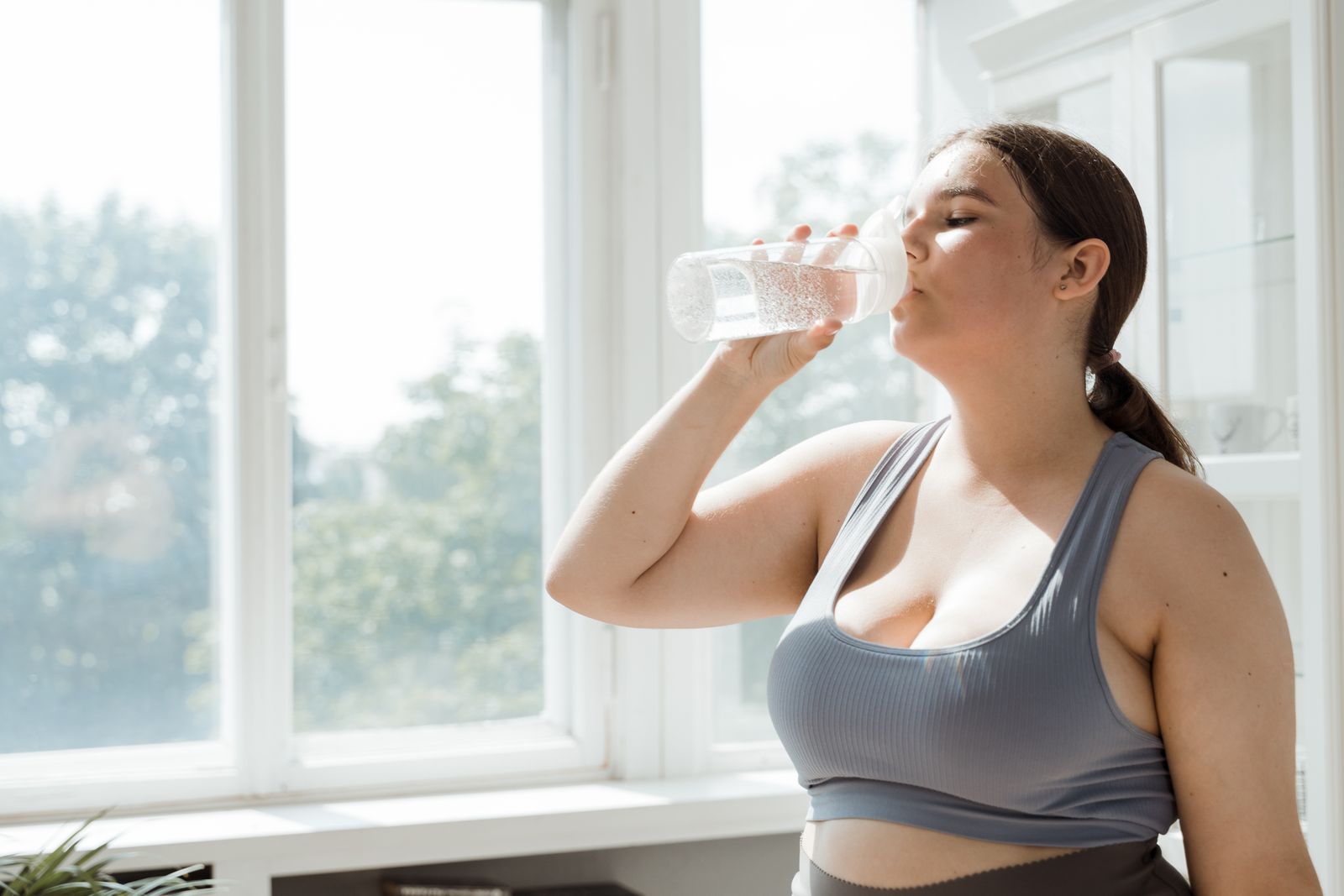
It’s 3:30 p.m. and there’s a dull ache behind your eyes. You’ve had two coffees, half a sandwich, and zero memory of drinking anything else. Then you spot it: the big water bottle you filled with such good intentions at 7 a.m., still full, still sitting in the car’s cup holder.
You’re not lazy, and you’re not bad at this. Drinking enough water is one of those “simple” habits that gets crowded out by everything else. The fix isn’t more willpower. It’s making water the easy, obvious, already-in-your-hand choice. Here’s how.
Quick answer: To drink more water, make it automatic instead of relying on memory. Keep a bottle you like within reach, drink a glass at set moments (when you wake, with every meal, every bathroom break), flavor it with fruit if plain water bores you, swap one sugary drink a day for water, and eat water-rich foods like fruits and vegetables.
Key Takeaways
- Most healthy adults need roughly 9 to 13 cups of fluid a day, more in heat or when you’re active.
- About 20% of your water typically comes from food, and coffee and tea can count toward your total.
- The easiest wins are visual cues, routine “anchor” moments, and a bottle you actually enjoy using.
- Pale, clear urine is a rough sign you’re drinking enough. Dark urine, headaches, and fatigue can signal you need more.
- Sip steadily through the day instead of chugging large amounts at once.
How much water should you drink a day?
There’s no single magic number, and the old “8 glasses a day” rule was never meant to be a strict prescription. According to the Harvard T.H. Chan School of Public Health, the National Academy of Medicine suggests about 13 cups (104 ounces) a day for men and about 9 cups (72 ounces) for women. Harvard calls this a general guide rather than a daily target, and notes that roughly 20% of total water intake comes from food, especially fruits and vegetables.
Your needs go up when it’s hot, when you’re more active, and when you’re sick. The CDC notes that you need more water in hot climates, during physical activity, and if you have a fever, diarrhea, or vomiting. If you’re pregnant, breastfeeding, or have a kidney or heart condition, ask your doctor for a number that fits you.
Why is it so hard to drink enough water?
Because nothing reminds you. Hunger is loud. Thirst is quiet, and by the time you notice it, you’re often busy. Add a full schedule, a car that doubles as an office, and a coffee habit that feels like it “counts,” and water quietly slips off the list.
That’s why the strategies below are mostly about cues and convenience, not discipline. When water is in your hand at the right moments, you drink it without thinking.
What are the easiest ways to drink more water?
Pick two or three of these to start. Once they feel automatic, add another.
1. Find a bottle you actually like
It sounds small, but it matters. A bottle that keeps water cold, fits your cup holder, and doesn’t leak is one you’ll carry everywhere. The CDC lists keeping a reusable bottle with you as one of its top tips.
2. Keep water where you can see it
Out of sight really is out of mind. Put a full glass on your desk, a bottle on the kitchen counter, and one in the car. Every time you see it, it’s a gentle nudge.
3. Drink a glass first thing in the morning
You’ve gone all night without fluids. Make a glass of water the first thing you do, before or with your coffee. It’s a cornerstone of a healthy morning routine and gets you ahead before the day gets loud.
4. Anchor water to things you already do
Habits stick best when they ride on existing routines. Try a glass with every meal, every time you use the bathroom, and every time you refill your coffee. You don’t have to remember to drink. The routine reminds you.
5. Have water with every meal
The CDC suggests serving water with meals and ordering water when you eat out. It’s an easy two or three glasses a day without any extra effort.
6. Add natural flavor
If plain water bores you, squeeze in lemon or lime (another CDC tip), or try cucumber, mint, berries, or orange slices. Plain sparkling water counts too, if bubbles make it feel like a treat.
7. Make it cold
Many people simply drink more when water is cold. Keep a pitcher in the fridge, or freeze a bottle overnight so it melts into cold water through the day, as the CDC recommends.
8. Swap one sugary drink a day
You don’t have to quit soda or sweet coffee drinks cold turkey. Just trade one a day for water. Per the CDC, water has no calories, so replacing sugary drinks with plain water can help reduce calorie intake. It’s one of the quiet strategies in our guide to losing weight without dieting.
9. Eat your water
Fruits and vegetables like watermelon, oranges, cucumbers, lettuce, strawberries, and soups all add to your fluid intake. If you’re working on more produce in general, our beginner guide on how to start eating healthy shows how to add it without overhauling your diet.
10. Use a marked bottle or simple tracker
A bottle with time markers, a rubber band you move each time you refill, or a quick tally on a sticky note makes progress visible. Seeing “two refills by lunch” is surprisingly motivating.
11. Set a few phone reminders
Not every 15 minutes. That gets ignored fast. Two or three gentle reminders at your usual slump times (mid-morning, mid-afternoon) are enough.
12. Bring water to every workout and walk
Make your water bottle part of your gear, like your shoes and keys. Whether it’s a gym session or a brisk walk for weight loss, sip before, during, and after.
Does coffee or tea count toward your water intake?
Yes. The idea that caffeine dehydrates you isn’t fully supported by research. Harvard’s Nutrition Source explains that more than about 180 mg of caffeine (roughly two cups of brewed coffee) may increase urination short-term in some people, but it won’t necessarily cause dehydration, and coffee and tea can count toward your daily water intake.
That said, water is still the best default, especially if your coffee comes with a lot of sugar and syrup. Think of coffee and tea as helpers, not your whole plan.
How can you tell if you’re drinking enough water?
Your body gives you clues. Cleveland Clinic lists dark-colored urine, tiredness, headache, dizziness, dry mouth, and muscle cramps among the signs of dehydration, and notes that your urine should be a pale, clear color.
Here’s a quick reference:
| What you notice | What it may mean | What to do |
|---|---|---|
| Pale, straw-colored urine | You’re likely well hydrated | Keep your current habits |
| Dark yellow urine | You probably need more fluids | Drink a glass now and add an anchor habit |
| Afternoon headache or fatigue | Possibly low fluids (among many causes) | Have water, then check your intake pattern |
| Dizziness, confusion, or very little urine | Could be more serious dehydration | Rehydrate and contact a doctor if it doesn’t improve |
Keep in mind that urine color is only a rough guide. Harvard notes that thirst and urine color aren’t reliable on their own for older adults, so if you’re older, stick to a regular drinking schedule rather than waiting until you feel thirsty.
Can you drink too much water?
Yes, though it’s rare for healthy people drinking normally. According to Harvard, problems happen when a large amount of water is consumed quickly, faster than the kidneys can get rid of it. That dilutes the sodium in your blood, a condition called hyponatremia. People with kidney problems and endurance athletes in long, sweaty events are at higher risk.
The takeaway: sip steadily through the day instead of chugging a liter to “catch up” at night.
Make it fit your life: a realistic hydration day
H Klub Fitness is all about habits that bend around a busy life. Here’s what a no-stress hydration day can look like for a working parent. Adjust the times to your schedule.
| When | What | Roughly |
|---|---|---|
| Wake up | Full glass of water before coffee | 1 cup |
| Breakfast | Water with your meal | 1 cup |
| Mid-morning | Refill your bottle at your desk or in the car | 2 cups |
| Lunch | Water with lunch, plus fruit or a side salad | 1 to 2 cups |
| Afternoon slump | Cold water or plain sparkling water instead of a second soda | 2 cups |
| Workout or walk | Sip before, during, and after | 1 to 2 cups |
| Dinner | Water with dinner | 1 cup |
That adds up to about 9 to 11 cups without a single heroic chug, plus the water in your food and coffee. On training days or hot days, add a little more, especially around movement. If you train hard, hydration is also a big part of an effective active recovery day.
Busy-parent bonus: fill everyone’s bottles at the same time each morning. When the kids grab theirs, you grab yours.
Frequently Asked Questions
What is the fastest way to start drinking more water?
Drink a full glass as soon as you wake up and another with every meal. Those four moments alone can add about four cups a day without any tracking. Once that feels automatic, carry a bottle you like and refill it twice before dinner.
Does food count toward your daily water intake?
Yes. Roughly 20% of the water most people take in comes from food, especially fruits and vegetables. Watermelon, oranges, cucumbers, lettuce, and soups are all great sources.
Is it better to drink water all at once or throughout the day?
Throughout the day. Sipping steadily keeps you hydrated without overwhelming your body. Drinking a very large amount in a short time can dilute the sodium in your blood, which is rare but can be dangerous.
Does sparkling water count as drinking water?
Yes. Plain sparkling water hydrates you just like still water. Choose unsweetened versions, and if bubbles bother your stomach, mix it up with still water.
How much more water should I drink when I exercise?
You need more fluid when you’re active, especially in heat, but the exact amount depends on your body, the workout, and how much you sweat. A simple approach is to drink before, sip during, and refill after. If you’re training for long endurance events, talk with your doctor or a sports dietitian about a personal plan.
Back to that full bottle in the cup holder. Imagine the same 3:30 p.m., a few weeks from now. You’ve had a glass when you woke up, one with breakfast, and you’ve already refilled your bottle once. The headache isn’t there. Your energy holds through school pickup. Nothing dramatic changed. You just made water the easy choice.
If you want a plan that bends when life does, H Klub Fitness coaching is built for exactly that: small, doable habits that add up to feeling like yourself again.
This article is for general education and isn’t medical advice. Talk with your doctor before starting a new exercise, nutrition, or mental-health plan.