
You have decided to get stronger, opened a search box, and found a thousand programs that all promise results. Some want five days a week in a full gym, others want a monthly subscription, and you are not sure what a squat rack is for yet.
The program you pick on day one decides whether you are still lifting in month three. A beginner plan should tell you exactly what to do, when to add weight, and how to stay safe while you learn.
Quick answer
For most beginners with gym access, StrongLifts 5×5 is the best strength training program to start in 2027: three full-body barbell workouts a week, starting with the empty bar. Starting Strength suits people who want detailed technique teaching, Fitbod plans around home equipment, and Nike Training Club and the CDC's Growing Stronger guide are free. Check with a doctor before starting.
Key takeaways
- The CDC recommends muscle-strengthening activity on 2 or more days a week.
- StrongLifts 5×5 uses three workouts a week and starts with the empty bar.
- Starting Strength runs three non-consecutive days with squats at 3 sets of 5.
- Nike Training Club and the CDC's 126-page Growing Stronger guide are free.
- Fitbod lists $12.99 a month and has 289K App Store ratings.
Our picks at a glance
| Pick | Best for | Price or key number | Standout |
|---|---|---|---|
| StrongLifts 5×5 | Gym beginners who want a simple barbell plan | 3 workouts a week | Starts with the empty bar on most lifts |
| Starting Strength | Learning barbell technique in depth | 3 non-consecutive days a week | Built on Mark Rippetoe’s book |
| Fitbod | An app that plans around your equipment | $12.99/month or $79.99/year | 4.8 stars from 289K App Store ratings |
| Nike Training Club | Free home and gym workouts | Free | Equipment-free and gym programs |
| Growing Stronger (CDC and Tufts) | Older or inactive adults starting at home | Free 126-page guide | 12-week workbook, minimal equipment |
| JEFIT | Following and logging pre-made plans | Elite $12.99/month or $69.99/year | Adaptive Plan by goal, level and equipment |
| Caliber | Tracking free now, adding a coach later | Free; paid tiers listed from $3 to $12/month | Optional 1-on-1 coaching |
Number of ratings on each app's US App Store listing, checked October 31, 2026; Starting Strength and Growing Stronger have no app and are not shown.
How we chose
We compared each program’s official pages and US App Store listings as published in October and November 2026. We did not follow these programs or test the apps for this article. We ranked them by:
- Clear structure: set exercises, sets, reps and days, so a beginner knows exactly what to do.
- Built-in progression: a stated rule for when to add weight or difficulty.
- Instruction: how much the program explains form and starting weights.
- Cost and equipment: what you pay and whether you need a gym.
- Source: who wrote it, from public health agencies to coaches and app makers.
What are the best strength training programs for beginners in 2027?
1. StrongLifts 5×5: Best for gym beginners who want a simple barbell plan
StrongLifts 5×5 is three full-body barbell workouts a week. Its quick start guide, written by coach Mehdi Hadim, alternates Workout A (squat, bench press, barbell row) and Workout B (squat, overhead press, deadlift), with five sets of five on every lift except one heavy set of five on the deadlift.
Beginners start with the empty bar on the squat, bench and overhead press and add 5 lb when they finish every rep. The StrongLifts app has 4.9 stars from about 77K ratings; its listing says it requires a subscription, with Pro at $11.99 a month or $59.99 a year.
Pros
- Only five lifts to learn, with the exact weights and reps spelled out.
- Starting with the empty bar gives you time to practice form.
- The written program and starting-weight spreadsheet are free on the website.
Cons
- Needs a barbell, plates, a bench and a squat rack.
- The app needs a paid subscription to use.
- Five sets of five on the main lifts makes sessions longer than a 3×5 plan.
Key facts: 3 workouts a week; 5×5 on squat, bench, overhead press and row, 1×5 deadlift; 5 lb jumps; rest about 3 minutes between sets of five.
2. Starting Strength: Best for learning barbell technique in depth
Starting Strength is the novice program from Mark Rippetoe’s book Starting Strength: Basic Barbell Training. The official program page sets it on three non-consecutive days a week, and Rippetoe’s novice article ties that to a recovery window of 48 to 72 hours.
As laid out by Barbell Logic, Workout A is squat 3×5, press 3×5 and deadlift 1×5, and Workout B swaps the press for the bench press. Weight goes up every session. Later, power cleans replace the deadlift on one day.
Pros
- Detailed teaching of each lift through the book and website.
- Fewer total sets than 5×5, so sessions can be shorter.
- Weight goes up every session, so progress is easy to measure.
Cons
- Needs full barbell equipment.
- The power clean in later phases is a technical lift to learn.
- Most of the teaching lives in the book, a long read for someone who only wants a plan.
Key facts: 3 non-consecutive days a week; squat 3×5 every session; press and bench alternate; deadlift 1×5.
3. Fitbod: Best for an app that plans around your equipment
Fitbod builds workouts from your equipment, schedule and preferences, and it uses your training history and recovery to pick which muscles to train next. You can set it to bodyweight, bands or limited gear.
On the US App Store, Fitbod has 4.8 stars from 289K ratings. Its listed in-app purchases include a $12.99 monthly plan and a $79.99 yearly plan, with higher prices also listed.
Pros
- Adjusts each session to the gear you have.
- Rotates muscle groups based on recent training.
- Large exercise library with video demos.
Cons
- Subscription required after the free trial.
- Less predictable than a fixed beginner plan, which makes progress harder to compare week to week.
- Several price points are listed, so check the price shown in the app.
Key facts: $12.99/month or $79.99/year (as listed); 4.8 stars, 289K ratings; works with gym, home or bodyweight setups.
4. Nike Training Club: Best free option for home and gym
Nike Training Club is free on the App Store, where it has 4.8 stars from 283K ratings. The listing describes gym strength and conditioning programs, equipment-free bodyweight workouts, and weeks-long programs for both gym and home.
Pros
- No cost for the app.
- Equipment-free options for training at home.
- Mixes strength with yoga, pilates and recovery sessions.
Cons
- Less focused on steady weight increases than a barbell plan.
- So many workouts that beginners may hop between them instead of following one plan.
- Free access is tied to being a Nike Member, so you need a Nike account.
Key facts: Free; 4.8 stars, 283K ratings; gym and home programs.
5. Growing Stronger: Best for older or inactive adults starting at home
Growing Stronger: Strength Training for Older Adults is a free 126-page guide published by the CDC. The program was developed at Tufts University’s Nutrition, Exercise Physiology and Sarcopenia Laboratory and includes a 12-week workbook for tracking progress.
It needs minimal equipment and is written for people who are inactive or mildly active or unsure whether exercise is safe for them. The authors advise anyone under a physician’s care to talk with their doctor first.
Pros
- Free and written by researchers, with a public health agency as publisher.
- Built for people starting from very little activity.
- Home-based, with minimal equipment.
Cons
- Published in 2004, so read it alongside current guidance such as the CDC’s activity guidelines.
- Aimed at older adults; younger lifters may outgrow it quickly.
- No app or video coaching.
Key facts: Free; 126 pages; 12-week workbook; published 2004 by the CDC.
6. JEFIT: Best for following and logging pre-made plans
JEFIT is a workout planner and log. Its App Store listing describes an Adaptive Plan built around your goal, level and equipment, plus progress charts and one-rep-max estimates. It has 4.8 stars from 47K ratings.
Pros
- Pre-made plans and a detailed workout log in one app.
- Free to download, with paid Elite features.
- Progress charts make it easy to see gains over time.
Cons
- Some features sit behind JEFIT Elite at $12.99 a month or $69.99 a year.
- The number of options can overwhelm a first-time lifter.
- Plan quality depends on which routine you pick.
Key facts: Free with in-app purchases; Elite $12.99/month or $69.99/year (as listed); 4.8 stars, 47K ratings.
7. Caliber: Best for tracking free now and adding a coach later
Caliber offers a free app with unlimited workouts, 800+ exercises and step-by-step tutorials, according to its App Store listing. An optional Premium Coaching program adds a dedicated trainer, a personalized training and nutrition plan, and weekly progress reviews.
Pros
- The free tier covers workout building and tracking.
- A path to 1-on-1 coaching if you want accountability.
- Exercise tutorials for learning form.
Cons
- The coaching price is not listed on the App Store page.
- Several Plus prices are listed ($6 to $12 a month), so check the app.
- Smaller user base than the other apps here, with 6.1K ratings.
Key facts: Free tier; Caliber Plus listed from $6 to $12 a month; 4.8 stars, 6.1K ratings.
How many days a week should a beginner do strength training?
Two or three is the usual starting range. The CDC recommends muscle-strengthening activity on 2 or more days a week that works all major muscle groups. The NHS says at least 2 days a week, worked until you need a short rest before repeating.
Both agencies list the same muscle groups to cover:
- Legs and hips
- Back
- Abdomen (core)
- Chest and shoulders
- Arms
StrongLifts 5×5 and Starting Strength each use three full-body days, which covers that minimum with a day off between sessions.
Which beginner program fits your equipment and budget?
| Program | Cost | Equipment | Days per week |
|---|---|---|---|
| StrongLifts 5×5 | Program free; app $11.99/month | Barbell, rack, bench | 3 |
| Starting Strength | Program outline free online | Barbell, rack, bench | 3 |
| Fitbod | $12.99/month | Any, including bodyweight | You set it |
| Nike Training Club | Free | None to full gym | Varies by program |
| Growing Stronger | Free | Minimal, at home | Set by the guide |
| JEFIT | Free; Elite $12.99/month | Any | Varies by plan |
| Caliber | Free tier | Any | Varies |
If you only have a pair of dumbbells, our 3-day full-body dumbbell workout follows the same three-day pattern without a barbell.
Is strength training safe for beginners?
For most healthy adults, starting light and adding weight slowly is a sensible approach, but check with a doctor before you begin. The NHS says to speak to your GP first if you have not exercised for some time or have medical conditions or concerns.
The NHS Strength and Flex how-to page also advises getting professional advice first if you:
- Are unsure whether the exercises suit your fitness level
- Have a health problem, injury or symptoms
- Have had a recent heart attack or operation
- Are pregnant or have recently given birth
Stop if you feel pain or become unwell. Nerves about a busy weight room are common too; our piece on gym anxiety covers that first walk in, and our guide to getting back into working out after a long break helps if you are returning.
Which program should you start with?
- You have gym access and want a clear plan: start StrongLifts 5×5 with the empty bar.
- You want to study each lift in detail: read Starting Strength and run its novice program.
- You train at home with mixed gear: Fitbod plans around what you own.
- You want to spend nothing: Nike Training Club or Growing Stronger.
- You are older or have been inactive for years: Growing Stronger, after a talk with your doctor.
- You want a coach checking in: Caliber’s free tier first, then its coaching if you need it.
Ready to build a habit that lasts?
H Klub Fitness covers beginner workouts, recovery and real stories from people getting stronger. Find your next step on our site.
Frequently asked questions
What is the best strength training program for a complete beginner?
For a beginner with gym access, StrongLifts 5×5 is a simple start: three full-body barbell workouts a week, starting with the empty bar. If you train at home, Nike Training Club is free and Fitbod plans around your equipment. Check with a doctor before starting if you have health concerns.
How many days a week should a beginner lift weights?
The CDC recommends muscle-strengthening activity on 2 or more days a week covering all major muscle groups. Many beginner barbell programs, including StrongLifts 5×5 and Starting Strength, use three full-body days with rest days in between.
Is StrongLifts 5×5 good for beginners?
It is built for them. The program uses five lifts, starts with the empty bar on the squat, bench and overhead press, and adds 5 lb when you finish every rep. You need a barbell, rack and bench, and the app requires a paid subscription.
What is the difference between StrongLifts 5×5 and Starting Strength?
StrongLifts uses five sets of five and adds barbell rows. Starting Strength uses three sets of five, alternates the press and bench press, and later adds power cleans. Both run three days a week and add weight each session.
Can I start strength training at home without equipment?
Yes. Nike Training Club offers free equipment-free bodyweight workouts, Fitbod can plan bodyweight-only sessions, and the CDC's Growing Stronger guide needs only minimal equipment. The NHS lists bodyweight exercises like press-ups and sit-ups as strengthening activities.
Is there a free strength training program for beginners?
Yes. Nike Training Club is free, the StrongLifts 5×5 program is free to read on its website, and Growing Stronger is a free 126-page guide published by the CDC with a 12-week workbook.
Should I see a doctor before starting strength training?
It is a good idea, especially if you have not exercised for a while or have a health condition. The NHS advises speaking to your GP first in those cases and stopping if you feel pain or become unwell.
Sources
- Stronglifts: 5×5 Workout Program quick start guide
- Stronglifts: 5×5
- App Store: Stronglifts 5×5 Workout Plan
- Starting Strength: Training programs
- Starting Strength: Who Wants to Be a Novice? You Do
- Barbell Logic: Novice Linear Progression explained
- Fitbod: Home
- App Store: Fitbod Gym & Fitness Planner
- App Store: Nike Training Club
- CDC Stacks: Growing Stronger: Strength Training for Older Adults
- App Store: JEFIT Workout Plan Gym Tracker
- App Store: Caliber Strength Training
- CDC: Adult activity guidelines
- NHS: Physical activity guidelines for adults aged 19 to 64
- NHS: Strength and Flex exercise plan how-to videos
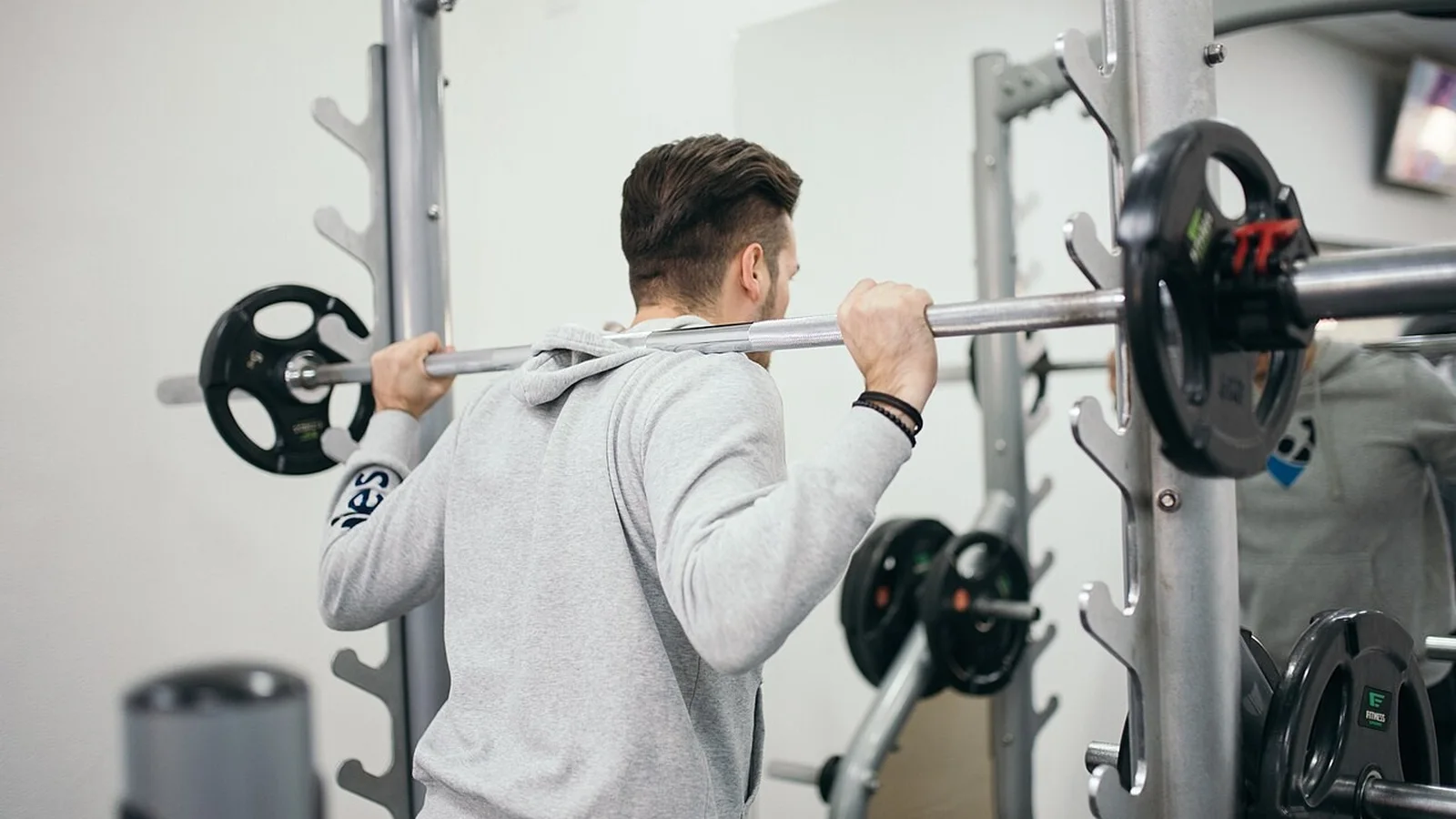
Featured image: photo by Nenad Stojkovic, CC BY 2.0, via Wikimedia Commons.
Last updated: November 2026. Prices, dates and details change; check each official site before you decide.