
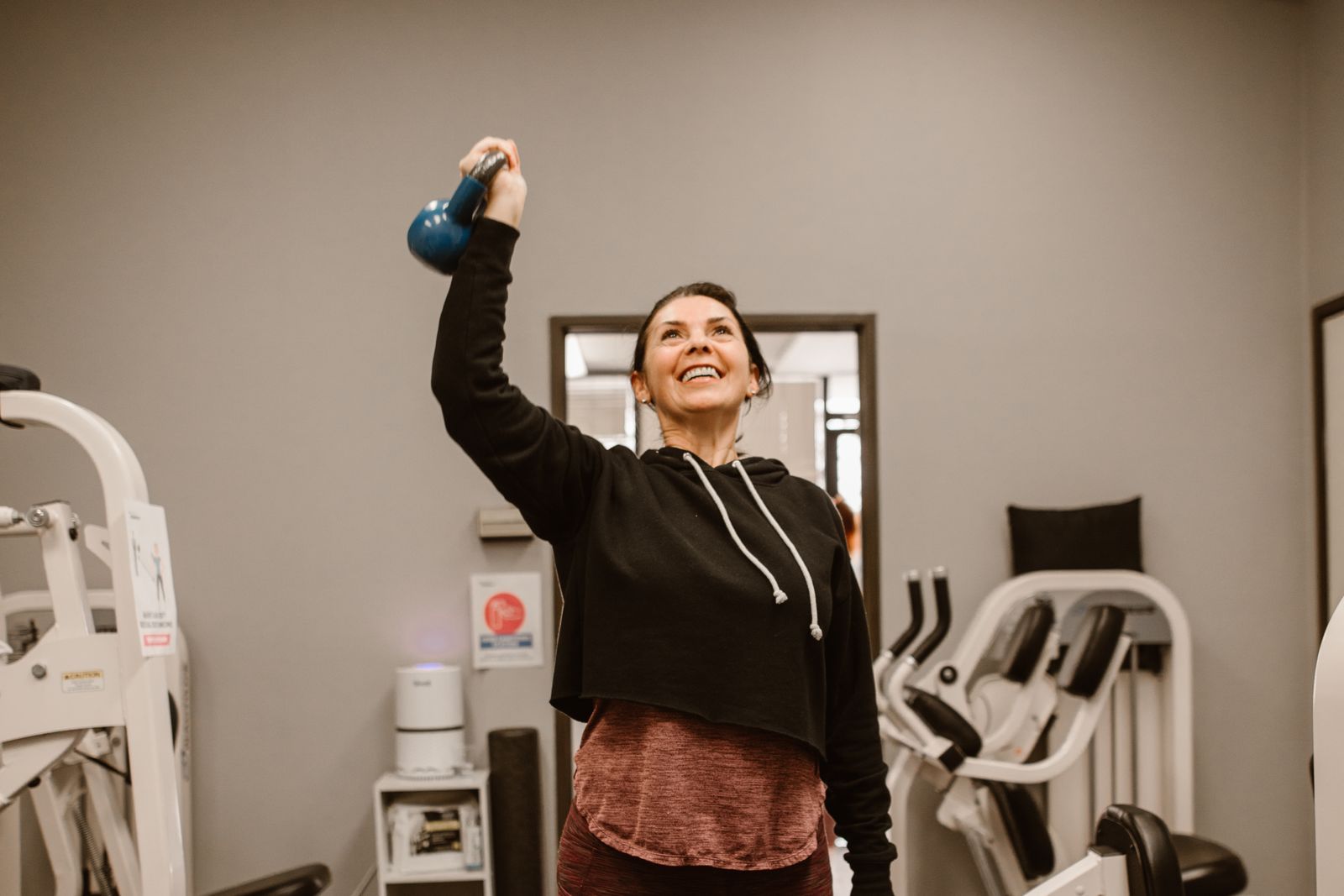
It’s sitting by the back door. Maybe it’s holding the door open. The kettlebell you bought with real intentions, the one you stepped over this morning on your way to the car with a granola bar in your teeth and a permission slip you forgot to sign.
You’ve watched the videos. People swinging, flipping, flowing. It looks athletic and a little intimidating, and you’re not sure where a regular person with 20 minutes and a tight lower back even starts. Here’s the good news: you start small, and you start today. This is the exact plan.
Quick answer: A good beginner kettlebell workout uses one bell and six basic moves: deadlift, goblet squat, single-arm row, two-hand swing, halo, and suitcase carry. Do 2 or 3 circuit rounds of 8 to 10 reps, two or three times a week. Pick a bell you can lift cleanly 10 times, then build reps and rounds over four weeks.
Key Takeaways
- Six moves cover your whole body: hinge, squat, pull, swing, core, and carry.
- Choose a starting weight you can lift for about 10 clean, controlled reps. If the last few aren’t a little hard, it’s too light.
- Learn the deadlift before the swing. The swing is just a faster, more powerful hip hinge.
- Two or three sessions a week, about 20 minutes each, is plenty to build real strength as a beginner.
- Progress by adding reps, then rounds, then weight, in that order.
What is the best beginner kettlebell workout?
The best beginner kettlebell workout is the one that teaches your body the basic movement patterns safely and that you’ll actually repeat. Flashy combos can wait. The plan below uses one kettlebell, fits in a living room, and takes about 20 to 25 minutes including a warm-up.
Do the moves in order as a circuit. Move from one exercise to the next with a short breather, then rest at the end of each round. In week one, do two rounds. By week four, you’ll be doing three.
Warm-up (3 to 5 minutes, no weight)
- 10 bodyweight squats, slow and deep as is comfortable
- 10 hip hinges with your hands on your hips (push your butt back like you’re closing a car door with it)
- 10 arm circles each direction
- 20 seconds of marching in place, knees high
The beginner kettlebell workout (printable)
| Exercise | Sets (rounds) | Reps / time | Rest |
|---|---|---|---|
| 1. Kettlebell deadlift | 2 to 3 | 10 reps | 20 to 30 sec, then next move |
| 2. Goblet squat | 2 to 3 | 8 to 10 reps | 20 to 30 sec |
| 3. Single-arm bent-over row | 2 to 3 | 8 reps each side | 20 to 30 sec |
| 4. Two-hand kettlebell swing | 2 to 3 | 10 reps (or 20 sec) | 20 to 30 sec |
| 5. Halo | 2 to 3 | 5 circles each direction | 20 to 30 sec |
| 6. Suitcase carry | 2 to 3 | 20 steps each hand | 60 to 90 sec, then repeat the round |
Finish with two minutes of easy breathing and a gentle hamstring and hip stretch. That’s the whole session.
What weight kettlebell should a beginner start with?
Start with a weight that lets you do five to 10 good, controlled reps and feel some real effort by the end. That’s the simple test Harvard Health recommends for kettlebell beginners, and it beats any chart because it’s based on your body, not someone else’s.
For general reference, many coaches start women around 8 kg (about 18 lb) and men around 12 to 16 kg (about 26 to 35 lb). Treat those as loose starting points. Your training history, injuries, and the specific move all matter. Swings and deadlifts can usually handle more weight than halos or rows.
- Too heavy: your back rounds, your shoulders shrug toward your ears, or you’re grunting through rep three.
- Just right: the last two reps are a little hard, but your form looks the same as rep one.
- Too light: you could easily do 20 more. Time to add reps or, later, size up.
If you only buy one bell, lean toward the lighter option. You’ll outgrow it on swings first, and that’s a great problem to have.
How do you do each kettlebell exercise with good form?
Form is the whole game for a beginner. Move slowly, own every rep, and stop a set early if things start to get sloppy. Here are the cues that matter most.
1. Kettlebell deadlift
Stand with feet about hip-width apart and the bell between your feet. Push your hips back, soften your knees, and grip the handle with both hands. Brace your stomach like you’re about to be poked, then stand up tall by driving your feet into the floor. Cue: long spine, hips back, stand up through your heels. This is the foundation for the swing.
2. Goblet squat
Hold the bell by the horns (the sides of the handle) at your chest, elbows pointing down. Sit down between your heels, keeping your chest proud, then stand back up. Go only as deep as you can with a neutral back. Cue: elbows inside your knees, weight across your whole foot.
3. Single-arm bent-over row
Stagger your stance, rest one hand on a chair or your front thigh, and hinge forward with a flat back. Pull the bell toward your hip, not your armpit, then lower it slowly. Cue: start the pull by squeezing your shoulder blade back, and don’t twist your torso.
4. Two-hand kettlebell swing
Set the bell a foot in front of you. Hinge, grab it, and hike it back between your legs like a football snap. Then snap your hips forward hard so the bell floats up to about chest height. Let it fall back into the hinge and repeat. The power comes from your hips, not your arms, which is why swings work your glutes, hips, hamstrings, and lower back. Cue: hinge, don’t squat. At the top, stand tall and squeeze your glutes; don’t lean back.
5. Halo
Hold the bell upside down by the horns at chest height. Slowly circle it around your head, keeping it close, then reverse direction. Keep your ribs down and hips still. Cue: move only your arms, and breathe.
6. Suitcase carry
Pick the bell up in one hand like a suitcase and walk 20 steps, turn around, and walk back. Switch hands. Stay perfectly upright, no leaning toward the bell. Cue: walk like you have a cup of coffee balanced on your head. It’s sneaky-hard on your core and grip.
How long and how often should a beginner do kettlebell workouts?
Plan on about 20 to 25 minutes per session, two or three times a week, with at least a day off between sessions. That lines up nicely with the CDC’s guidelines for adults, which call for muscle-strengthening activity at least two days a week on top of 150 minutes of moderate aerobic activity. The American College of Sports Medicine gives the same twice-a-week minimum for strength.
A kettlebell session checks the strength box, and the swings raise your heart rate too. Still, give your body room to adapt. On the off days, walk, stretch, or take an easy active recovery day so you come back fresh instead of sore and dreading it.
What does a 4-week beginner kettlebell progression look like?
Progress one lever at a time: reps first, then rounds, then weight. That keeps the jump small enough that your form never has to break.
| Week | Rounds | Reps per move | Swings | Focus |
|---|---|---|---|---|
| Week 1 | 2 | 8 | 5 to 8 slow, controlled swings | Learn the hinge. Film one set of deadlifts and check for a flat back. |
| Week 2 | 2 | 10 | 10 swings | Smooth breathing; rest only as long as you need. |
| Week 3 | 3 | 10 | 12 swings | Add the third round. Keep the same weight. |
| Week 4 | 3 | 12 | 15 swings (or 20 sec) | If every rep looks clean, plan to size up your bell on deadlifts and swings next. |
Missed a session? Repeat that week. There’s no penalty for slowing down. The goal is to finish four weeks feeling stronger and more confident, not wrecked.
Is a kettlebell workout cardio or strength training?
Both, depending on how you use it. Slow, controlled moves like deadlifts, squats, and rows are strength work. Swings done for time push your heart rate up and feel a lot like cardio. One tool, one small space, two jobs.
If you want even more variety in your week, pair this routine with a 3 day full body dumbbell workout or swap in a 20 minute home workout with no equipment on travel days. And remember the payoff goes beyond muscle: the CDC notes regular activity can help you sleep better and ease short-term feelings of anxiety.
How do you make a kettlebell workout fit a busy life?
This is where most plans fall apart. Not because people are lazy, but because life is loud. Here’s how to bend the plan without breaking it.
- Keep the bell where you’ll see it. Living room corner, not garage shelf. Visible equals usable.
- Have a 10-minute version. One round of the circuit plus 20 swings counts. It keeps the habit alive on hard days.
- Stack it. Do your round while the pasta water boils or right after school drop-off.
- Let the kids in. They can do the bodyweight squats and the march with you. You’re modeling something good.
- Coming back after a long break? Start with one round and build. Our guide on how to get back into working out walks through it.
Celebrate the wins that don’t show up on a scale: carrying all the groceries in one trip, getting off the floor without a hand, sleeping a little deeper. Those count. They’re the point.
Frequently Asked Questions
Can a beginner do kettlebell workouts every day?
It’s better not to at first. Two or three strength sessions a week with a rest or light-movement day in between gives your muscles and joints time to adapt. On the off days, walking or gentle mobility work keeps you moving without piling on fatigue.
Is one kettlebell enough for a full-body workout?
Yes. A single bell covers squats, hinges, rows, swings, carries, and core work, which hits every major muscle group. You’ll eventually want a heavier bell for swings and deadlifts, but one bell is plenty for your first several weeks.
Are kettlebell swings bad for your back?
Swings done with good form train the muscles that support your back, but poor form can strain it. Master the deadlift first, hinge at the hips instead of squatting, and stand tall at the top without leaning back. If you have a history of back problems, check with your doctor or a qualified coach before you start swinging.
Will a beginner kettlebell workout help with weight loss?
It can help as part of a bigger picture. Strength training builds and maintains muscle and swings raise your heart rate, but weight change depends mostly on overall activity, food, sleep, and stress. Focus on showing up consistently and let the results follow.
When should I move up to a heavier kettlebell?
Size up when you can finish every round at the top of the rep range with clean form and the last reps no longer feel challenging. Most people need a heavier bell for swings and deadlifts before squats, rows, or halos. Move up one size at a time.
Back to that kettlebell by the door
Tomorrow morning it’ll still be there. But this time you’ll know exactly what to do with it: six moves, two rounds, about 20 minutes. Not perfect. Just started. And four weeks from now, it won’t be a doorstop anymore. It’ll be proof.
If you want a plan that bends when life does, H Klub Fitness coaching is built for exactly that.
This article is for general education and isn’t medical advice. Talk with your doctor before starting a new exercise, nutrition, or mental-health plan.