
It’s Thursday. Your legs still remember Tuesday’s lunges every time you take the stairs. Your plan says “rest day,” but you’ve been sitting at a desk for nine hours, your hips feel like rusty hinges, and lying on the couch all evening sounds both perfect and somehow wrong.
So which is it: move today, or don’t? The answer is yes, a little. That’s exactly what an active recovery day is for, and doing it well is simpler than you think.
Quick answer: An active recovery day is a planned rest day where you move gently instead of not at all: an easy walk, a bike ride, a swim, yoga, mobility work, or foam rolling. Keep it conversational, about 3 to 4 out of 10 effort, for 20 to 30 minutes, and finish feeling better than when you started.
Key Takeaways
- Active recovery means low-intensity movement on rest days or after hard sessions, not a lighter version of your normal workout.
- Keep the effort at a level where you could chat comfortably, well below the 5 to 6 out of 10 that the CDC considers moderate.
- A 2018 meta-analysis found active recovery reduced delayed-onset muscle soreness, though it didn’t significantly change how fatigued people felt.
- Passive rest still matters, especially when you’re sick, injured, or running on short sleep.
- Progress comes from balancing hard training with enough recovery, not from training harder every day.
What is an active recovery day?
Cleveland Clinic defines active recovery as low-intensity physical activity done after strenuous exercise or on rest days. Think of it as maintenance, not training. You’re not trying to get fitter today. You’re helping your body absorb the work you already did.
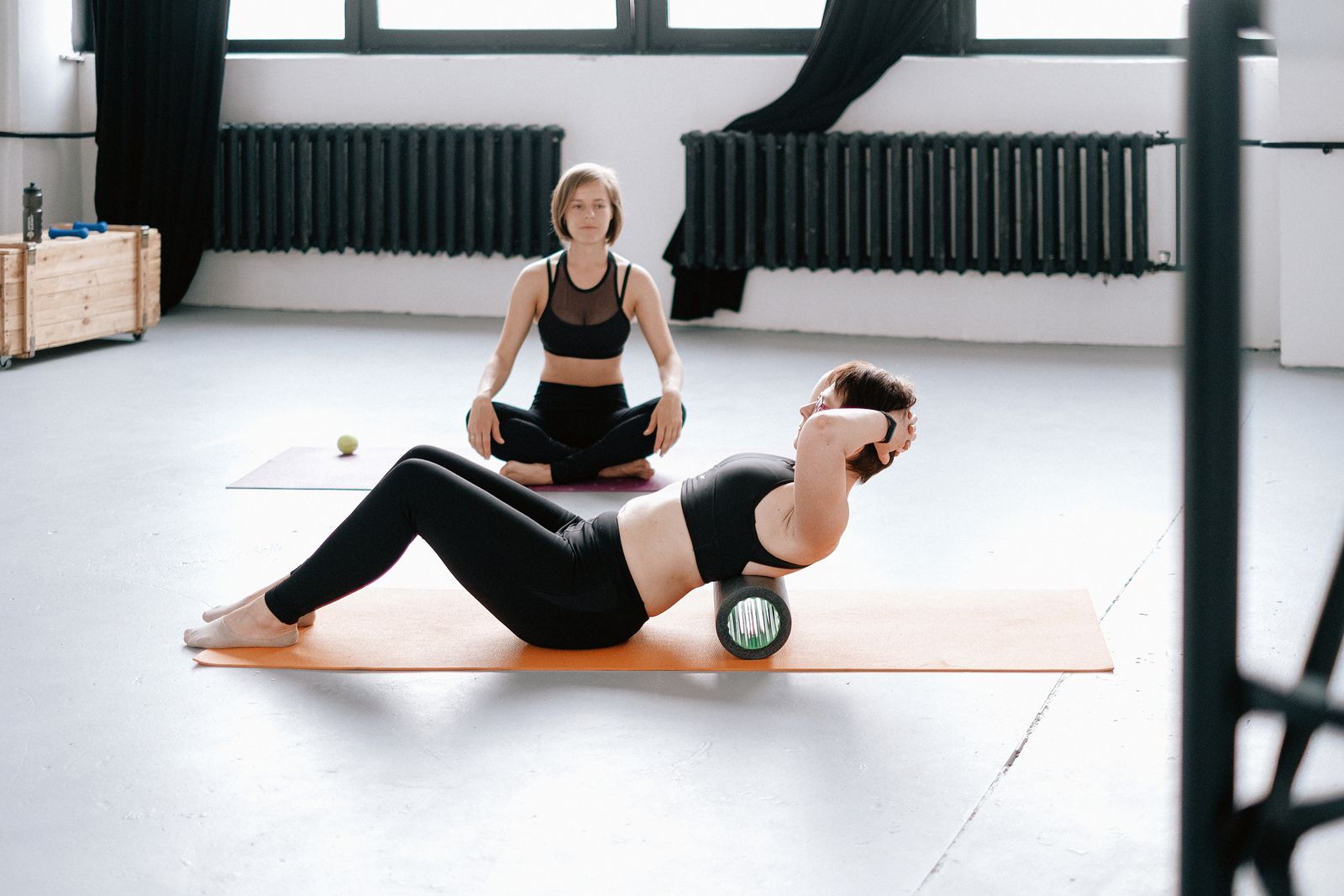
Common choices include walking, easy cycling, swimming, yoga, Pilates, stretching and mobility work, and foam rolling. Even your usual workout can count if you slow way down and cut the number of sets.
What it isn’t: a “light” HIIT class, a long run at your normal pace, or “just a quick” leg day. If you finish more tired than you started, it wasn’t recovery.
What are the benefits of active recovery?
Cleveland Clinic lists less muscle soreness, better circulation, improved mobility, less stiffness, and mental health benefits among the perks. The research is encouraging, if not magical.
A 2018 systematic review and meta-analysis in Frontiers in Physiology found that active recovery significantly reduced delayed-onset muscle soreness (DOMS), but didn’t significantly change perceived fatigue, and it didn’t outperform the other recovery methods studied. In that same review, massage came out on top for both soreness and fatigue.
So here’s the honest version: an easy walk won’t erase a brutal workout. But it can make the next couple of days feel less creaky, and it keeps the habit of moving alive on days you’d otherwise skip. For busy people, that second benefit is often the bigger one.
There’s a bigger-picture reason, too. In a joint consensus statement, the American College of Sports Medicine and the European College of Sport Science wrote that successful training needs overload, but must avoid “excessive overload plus inadequate recovery.” Recovery days are where that balance gets built.
How hard should an active recovery workout be?
Easy. Easier than you think. The CDC describes moderate-intensity activity as about a 5 or 6 on a 0-to-10 effort scale, where you can talk but not sing. Active recovery should sit below that, around a 3 or 4, where you could hold a full conversation without pausing for breath. Three quick checks:
- The talk test: You can speak in full sentences easily.
- The tomorrow test: You’d happily do the same session again tomorrow.
- The feel test: You finish looser and more awake than you started, not drained.
What does a 25-minute active recovery session look like?
Here’s a simple session you can do at home, at the park, or at the gym. No equipment needed beyond an optional foam roller.
| Time | What to do | How it should feel |
|---|---|---|
| 0–5 min | Easy walk or march in place, arm circles, shoulder rolls | 2/10: just waking things up |
| 5–15 min | Easy cardio: comfortable walk, easy bike, or easy swim | 3–4/10: full sentences, no huffing |
| 15–20 min | Mobility flow: 6 cat-cows, 4 world’s greatest stretches per side, 6 open books per side, 30-second hip flexor stretch per side | Smooth, pain-free range; no forcing |
| 20–25 min | Foam roll calves, quads, and upper back (about 45 seconds each), then 1 minute of slow breathing on your back | Pressure, not pain; breathing slows |
Only have 10 minutes? Do the walk and the mobility flow. Have 40? Stretch the walk to 25 minutes. If walking is already your go-to, our guide to walking for weight loss shows how to build it into the rest of your week.
Cat-cow
On hands and knees, round your back toward the ceiling as you exhale, then let your belly drop and lift your chest as you inhale. Move slowly with your breath.
World’s greatest stretch
Step into a long lunge and place both hands inside your front foot. Rotate your chest open and reach the inside arm toward the ceiling, then return and switch sides.
Open books
Lie on your side with knees bent and both arms stretched in front of you. Sweep the top arm up and over to the other side, following it with your eyes, then bring it back.
Half-kneeling hip flexor stretch
Kneel on one knee, squeeze the glute on that side, and gently shift your hips forward until you feel a stretch in the front of the hip. Desk workers, this one’s for you.
Active recovery vs. passive recovery: which do you need?
Cleveland Clinic describes passive recovery as true rest, like sleep or massage, and recommends skipping active recovery when you’re injured, sick, not sleeping enough, or just don’t feel up to it.
| Active recovery | Passive recovery | |
|---|---|---|
| What it is | Light, easy movement | True rest |
| Best when | You’re sore or stiff but otherwise feel OK | You’re sick, injured, or running on short sleep |
| Examples | Walking, cycling, swimming, yoga, mobility, foam rolling | Sleep, a nap, a massage, a full day off |
Both count. Sleep is the most powerful passive recovery tool you have, which is why it’s worth knowing how much sleep you need. If short nights are the problem, start with these techniques to fall asleep fast.
How often should you take an active recovery day?
There isn’t one magic number. It depends on how hard and how often you train. A practical starting point:
- Training 2 to 3 days a week (like a 3-day full body dumbbell workout): most off days can be light active recovery. A daily walk counts.
- Training 4 to 5 days a week: plan at least one active recovery day and one full rest day.
- After an unusually hard session or event: take an active recovery day next, then reassess.
Watch for the warning signs. The ACSM and ECSS statement lists fatigue, declining performance, and mood disturbances among the symptoms of overtraining. If your workouts are getting worse instead of better, you need more recovery, not more effort.
Make it fit your life: active recovery for busy people
- Stack it onto something you already do. Walk the kids to school, take a phone call on foot, or run the mobility flow while dinner is in the oven.
- Use the 10-minute floor. On chaotic days, 10 minutes of walking plus two stretches is a win. Done beats perfect.
- Make it social. A slow walk with your partner, a friend, or a stroller doubles as connection time.
- Split it up on desk days. A 5-minute walk at lunch, hip stretches mid-afternoon, foam rolling before bed.
- Let it be the bridge. On weeks when even a 20-minute home workout isn’t happening, a recovery walk keeps the habit warm so Monday isn’t a restart.
Frequently Asked Questions
What should I do on an active recovery day?
Choose low-intensity movement you enjoy: walking, easy cycling, swimming, yoga, Pilates, stretching, or foam rolling. Keep it to about 20 to 30 minutes at an effort where you can talk easily. The goal is to finish looser and more energized, not tired.
Is walking good for active recovery?
Yes. Walking is one of the easiest active recovery options because it’s low impact, needs no equipment, and is simple to keep at a gentle pace. Keep it conversational and add a few mobility moves at the end if you have time.
Is active recovery better than a full rest day?
Not better, just different. Research shows active recovery can reduce muscle soreness, but true rest matters too, especially when you’re sick, injured, or short on sleep. Most training weeks benefit from a mix of both.
How long should an active recovery workout be?
About 20 to 30 minutes is plenty for most people, and even 10 minutes of walking and stretching helps on busy days. Longer is fine as long as the effort stays truly easy.
Can I lift weights on an active recovery day?
Light, technique-focused work can count if it stays easy. Cleveland Clinic notes that slowing your pace or cutting your number of sets can be a form of active recovery. If it leaves you sore or tired, it was a workout, not recovery.
Back to Thursday. The lunges are still talking every time you take the stairs, and the couch is still calling. So you split the difference: 15 minutes around the block, a few cat-cows on the living room floor, a minute of slow breathing before bed. Your hips loosen. Your head clears. Tomorrow’s workout feels possible again.
That’s the point. Recovery isn’t the opposite of progress. It’s part of it. If you want a plan that builds in rest the right way and bends when life does, H Klub Fitness coaching is built for exactly that.
This article is for general education and isn’t medical advice. Talk with your doctor before starting a new exercise, nutrition, or mental-health plan.