
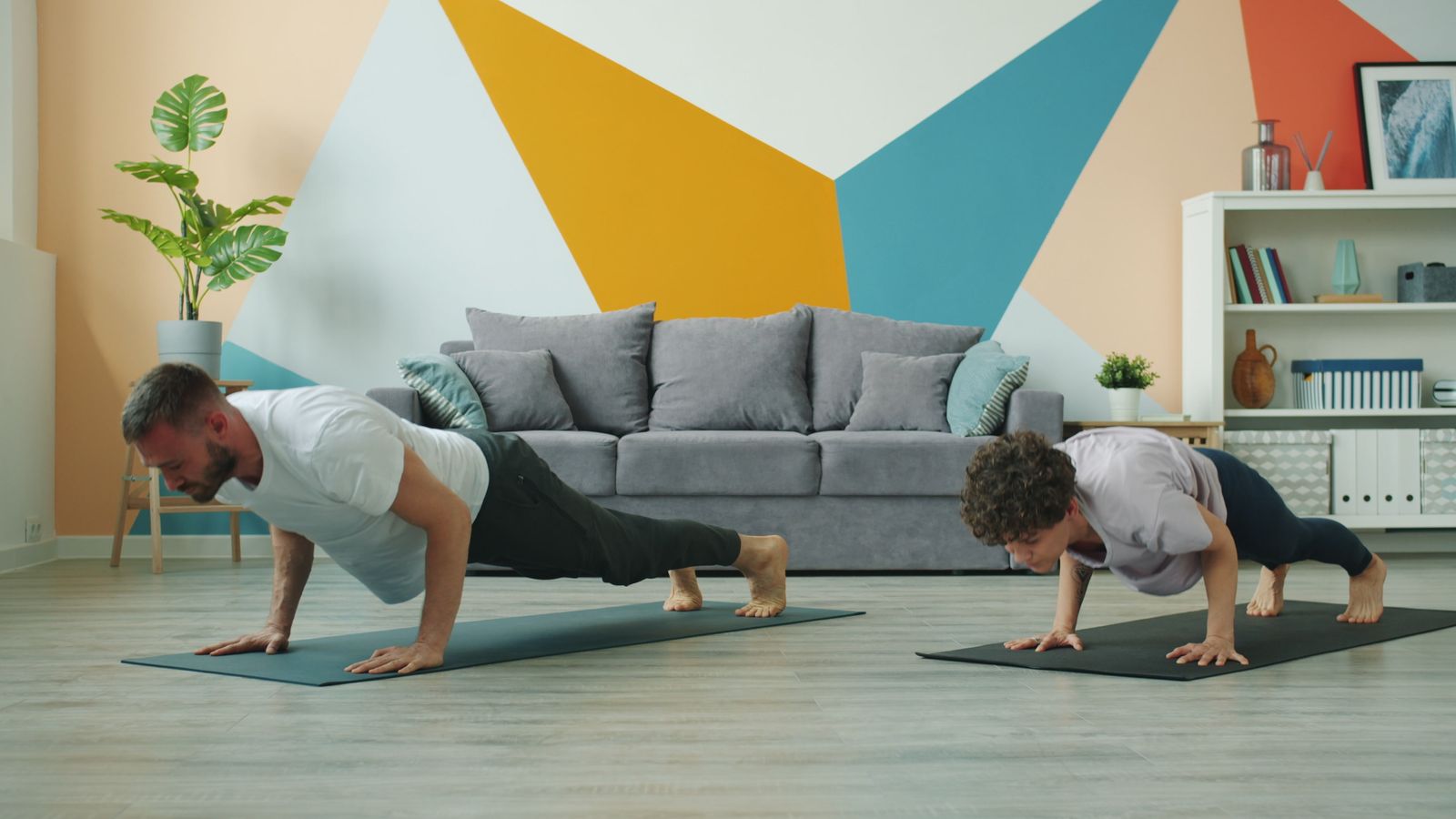
It’s 8:40 p.m. The dishwasher is humming, the kids are finally asleep, and you’re standing in the living room doing the math. Twenty minutes before you’re too tired to care. Not enough time to drive anywhere. Maybe not enough to bother?
It’s enough. Twenty focused minutes on your living room floor, no equipment, no commute, no audience, can build strength, raise your heart rate, and quietly remind you that you still keep promises to yourself. Here’s exactly what to do, minute by minute.
Quick answer: A good 20 minute home workout is a 3-minute warm-up, a 15-minute circuit, and a 2-minute cooldown. The circuit is five bodyweight moves (squat, push-up, reverse lunge, plank, and a cardio move) done for 3 rounds of 40 seconds on, 20 seconds off. Beginners use 30/30; harder versions use 45/15.
Key Takeaways
- Twenty minutes of moderate-to-vigorous exercise counts, and it adds up across the week.
- Five moves cover your whole body: squat, push, lunge, core, and cardio.
- Every move has a beginner version and a harder version, so the same workout grows with you.
- Use the talk test: at moderate effort you can talk but not sing.
- Doing this 3 to 4 times a week, plus walking, covers a big chunk of the recommended weekly activity.
Is a 20 minute workout enough?
For most people, yes, especially when you do it most days of the week. The CDC’s guidelines for adults call for 150 minutes of moderate activity a week (or 75 minutes of vigorous activity) plus at least two days of muscle-strengthening work. Twenty minutes a day, five days a week, covers about two-thirds of that cardio target, and a bodyweight circuit like this one counts toward strength too.
In a Harvard Gazette interview, physical activity researcher I-Min Lee points out that federal guidelines link even moderate activity, about 21 minutes a day, to lower risk of heart disease, dementia, depression, and several cancers. The American College of Sports Medicine also lists about 20 minutes of vigorous activity three days a week as one way to meet its aerobic guidance.
Translation: short is not “less than.” Short is how real people with real schedules get it done.
What is the best 20 minute home workout with no equipment?
The best one works your whole body, needs nothing but a little floor space, and can be scaled up or down. Set a timer app for intervals (or just watch a clock) and follow this plan.
| Time | Block | What to do |
|---|---|---|
| 0:00 to 3:00 | Warm-up | 1 min march in place, 1 min arm circles and hip circles, 1 min slow bodyweight squats and hip hinges |
| 3:00 to 8:00 | Round 1 | 5 moves, 40 sec work / 20 sec rest each: squat, push-up, reverse lunge, plank, cardio move |
| 8:00 to 13:00 | Round 2 | Repeat all 5 moves, same timing |
| 13:00 to 18:00 | Round 3 | Repeat all 5 moves, same timing |
| 18:00 to 20:00 | Cooldown | Slow walk around the room, then stretch hips, hamstrings, chest, and calves |
Use your rest seconds to shake out, breathe, and get set up for the next move. If you need a longer break between rounds, take it. Finishing with good form beats finishing fast.
How do you do each move (beginner and harder versions)?
Start with the version that lets you keep moving with good form for most of the work interval. You can mix and match: maybe beginner push-ups and harder squats. That’s not cheating. That’s coaching yourself.
1. Squat
Feet about shoulder-width apart, sit your hips back and down, chest up, then stand tall. Beginner: squat to a chair and tap it lightly before standing. Harder: add a 2-second pause at the bottom, or a small jump on the way up if your joints feel good.
2. Push-up
Hands a little wider than your shoulders, body in one straight line from head to heels, lower your chest, then push away. Beginner: hands on a kitchen counter or the back of a sturdy couch. The higher your hands, the easier it is. Harder: full push-ups on the floor, or slow 3-second lowers.
3. Reverse lunge
Step one foot back and lower until both knees bend to about 90 degrees, then push through the front heel to stand. Alternate legs. Beginner: hold a chair or counter for balance and take a shorter step. Harder: drive the back knee up into a knee lift as you stand, or hold the bottom for a beat.
4. Plank
Forearms under shoulders, body long, squeeze your glutes and pull your belly button toward your spine. Beginner: plank on your knees, or with hands on the couch. Harder: high plank with alternating shoulder taps, keeping your hips still.
5. Cardio move
This is where your heart rate climbs. Beginner: step jacks (step one foot out at a time while your arms go overhead) or fast marching. Harder: jumping jacks, or burpees if you want the spicy version. Low-impact options are great for apartments, sleeping babies, and sensitive knees.
What’s the difference between the beginner and harder versions?
| Setting | Beginner version | Harder version |
|---|---|---|
| Work / rest | 30 sec on / 30 sec off | 45 sec on / 15 sec off |
| Rounds | 2 (add a 3rd when it feels good) | 3, with an optional 4th if you have time |
| Squat | Chair squat | Pause squat or jump squat |
| Push-up | Counter or couch push-up | Floor push-up, slow lowers |
| Lunge | Supported reverse lunge | Reverse lunge to knee drive |
| Plank | Knee plank | High plank with shoulder taps |
| Cardio | Step jacks or fast march | Jumping jacks or burpees |
When the beginner version feels manageable for every round, upgrade one move at a time. Small upgrades keep you progressing without making the workout something you dread.
How hard should a 20 minute workout feel?
Aim for moderate to vigorous effort. A simple check from the Harvard Gazette piece is the talk test: at moderate intensity you can talk, but you can’t sing. If you can belt out a chorus, push a little harder. If you can’t get a sentence out, ease up.
By the third round, you should feel warm, breathing harder, and your legs should be working. You should not feel dizzy, sharp pain, or chest discomfort. If you do, stop and check in with your doctor.
Can a 20 minute home workout help you lose weight?
It can be part of it. In the same Harvard Gazette interview, Lee notes that if weight loss is your goal, higher intensity work burns more calories in the same amount of time. The harder version of this circuit is built for that. But food, sleep, stress, and everyday movement matter just as much.
Pair these workouts with more steps across your day. Our guide to walking for weight loss shows how to build that habit without turning your life upside down.
How many days a week should you do a 20 minute home workout?
Three to four days a week is a great target, with walking or easy movement on the other days. If you want more structure, rotate this bodyweight circuit with a beginner kettlebell workout or a 3 day full body dumbbell workout once you have equipment. Same 20-ish minutes, more ways to get stronger.
How do you make a 20 minute workout fit a busy life?
The plan only works if it fits the life you actually have. A few ways to make it bend:
- Split it. Do the warm-up and round 1 in the morning, rounds 2 and 3 after dinner. It still counts.
- Pick your time slot once. “After the kids are down” or “before the first meeting” removes a decision every day.
- Lay out your clothes. Shoes by the couch is a surprisingly strong nudge.
- Bring the family. Kids love counting your squats, or joining in on step jacks.
- Use it on hard days. The CDC notes activity can ease short-term feelings of anxiety and help you sleep better. More on that in our piece on exercise for anxiety and depression.
If you’re a parent juggling everything, our guide to fitness for busy moms has more ways to find time that doesn’t exist yet.
Frequently Asked Questions
Is a 20 minute workout every day enough?
For many people, yes. Twenty minutes of moderate activity on most days goes a long way toward the recommended 150 minutes a week, and a bodyweight circuit also counts toward the two weekly strength sessions adults need.
Can you build muscle with a 20 minute home workout?
You can build strength and some muscle, especially as a beginner. As you get stronger, use harder variations, slower lowering, or longer work intervals to keep challenging your muscles. Eventually, adding dumbbells or a kettlebell gives you more room to progress.
Should I warm up before a 20 minute workout?
Yes. The 3-minute warm-up in this plan raises your heart rate gradually and gets your joints moving before the work starts. It’s especially important for early-morning or late-night sessions when you’ve been sitting for a while.
What if I can’t do a push-up yet?
Start with your hands on a counter or the back of a sturdy couch. The higher your hands, the easier the push-up. Lower the surface gradually over weeks until you’re ready for the floor.
Is a 20 minute workout better in the morning or at night?
The best time is the one you’ll stick with. Some people like getting it done before the day takes over, while others prefer it as a stress release after work. If late workouts keep you up, try finishing a bit earlier in the evening.
Back to the living room at 8:40
Same dishwasher hum. Same quiet house. But tonight you rolled out the mat, pressed start, and did three rounds. Twenty minutes later you’re a little sweaty, a little proud, and still on the couch by nine. That’s not a small thing. That’s how it starts.
If you want a plan that bends when life does, H Klub Fitness coaching is built for exactly that.
This article is for general education and isn’t medical advice. Talk with your doctor before starting a new exercise, nutrition, or mental-health plan.